

A Considered Surgical Option for Women Experiencing Permanent Hair Thinning
Hair loss in women can present very differently from male pattern hair loss, often involving diffuse thinning, changes along the part line, or gradual loss across the frontal scalp rather than defined areas of recession. For those considering a female hair transplant in Melbourne, careful assessment is essential to determine whether surgery is appropriate and, if so, how it should be planned.
At Atlantis Medical, female hair transplant surgery is approached conservatively and selectively. Not all women are suitable candidates for surgery, and many benefit from non-surgical treatment alone. Where surgery is considered, it is planned with a strong focus on subtlety, preservation of existing hair and long-term scalp health.
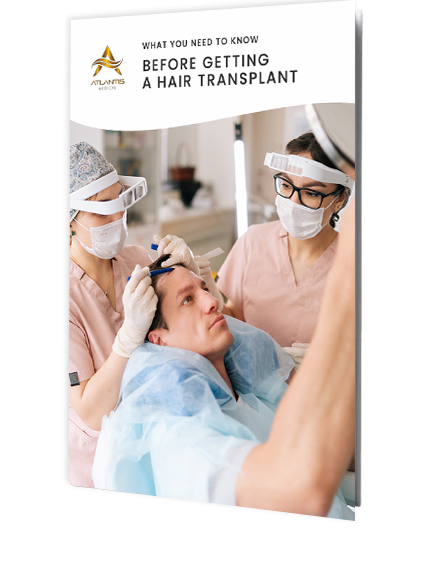
What You Need To
Know Before Getting
A Hair Transplant
Life-Changing Results
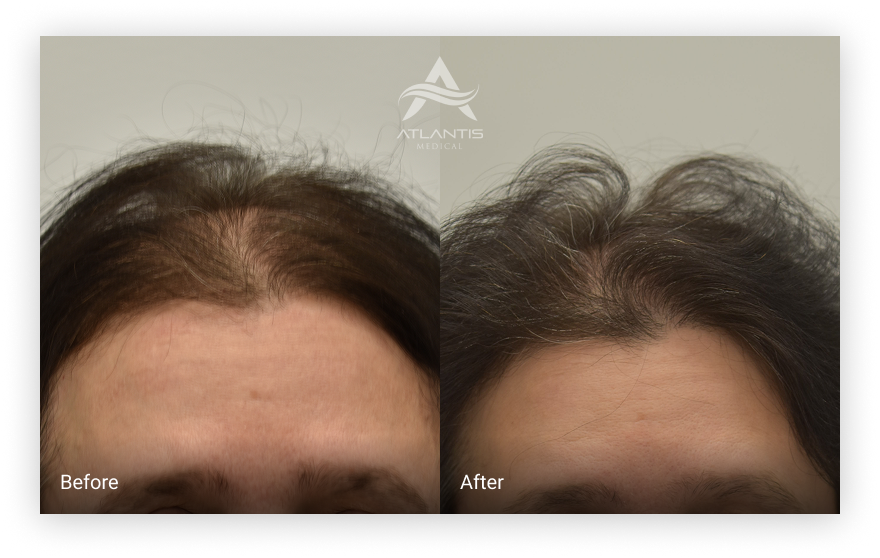
Before deciding on any specific procedure, we encourage you to review our hair transplant before
and after photos to see the impressive transformations our patients have achieved.
All photos are unedited and actual patients of Atlantis Medical. The images are displayed with the consent of the patients. The outcomes shown are only relevant for these patients and do not necessarily reflect the results other patients may experience. Our team will discuss any factors that could influence the results that you may get.
Take the first step towards regaining your confidence
and living life to the fullest today.
Hair Loss Patterns Commonly Seen in Women
Female hair loss often follows patterns that differ significantly from those seen in men. Understanding the nature and stability of hair thinning is a key part of determining suitability for surgical hair restoration.
Common hair loss patterns seen in women include:
- Diffuse thinning across the scalp
- Widening of the central part line
- Thinning along the frontal hairline without recession
- Hair loss associated with hormonal changes or post-pregnancy
- Stable thinning versus ongoing or fluctuating hair loss
When a Hair Transplant May Be Considered for Women
A hair transplant for women is not always appropriate, and suitability depends on more than the presence of thinning alone. Surgery is typically considered only after a clear diagnosis has been made and other causes of hair loss have been assessed.
A female hair transplant in Melbourne may be considered when:
- Hair loss is stable and localised rather than widespread or progressive
- Adequate donor hair is available
- Density expectations are realistic
- Non-surgical treatment options have been explored or optimised
Hair Transplant Surgery for Women
When surgical hair restoration is considered for women, Follicular Unit Excision (FUE) is the most commonly used technique. FUE allows for the precise placement of individual follicles with minimal disruption to surrounding hair, making it well suited to the patterns of thinning typically seen in women.
The goal of surgery is not to dramatically alter the hairline, but to improve density and blend transplanted hair seamlessly with existing hair. Planning focuses on subtle enhancement rather than visible change, with a strong emphasis on preserving native hair.
Follicular Unit Transplantation (FUT) is not typically used for women and is only considered in very limited circumstances.
Hairline, Part Line and Density Planning for Women
Surgical planning for women focuses less on rebuilding a hairline and more on improving overall balance and coverage while preserving what is already present. This requires a different approach to placement and density compared to male hair transplant surgery.
Key planning considerations include:
- Improving density along a widening part line
- Preserving the natural frontal hairline
- Blending transplanted hair with existing strands
- Avoiding visible signs of surgical intervention
Non-Surgical Support Before or Instead of Surgery
For many women, non-surgical hair loss treatment plays a central role in management, either before surgery is considered or as an alternative to surgery altogether. Medical and non-surgical options may help stabilise hair loss, improve hair quality, or slow further thinning, reducing the need for surgical intervention. A personalised assessment helps determine whether non-surgical treatment alone is appropriate or whether surgery may offer additional benefit.
How Much Does a Female Hair Transplant Cost?
The cost of a female hair transplant varies depending on individual factors rather than a standard price. Considerations include the extent of thinning, density requirements, surgical complexity and the level of planning required to preserve existing hair. Accurate guidance on cost can only be provided following a detailed assessment that considers both current hair loss and long-term expectations.
How to Book a Consultation
Booking your consultation is simple.
- Call us on (03) 9070 5234
- Contact us via our website
- Email us at enquiries@atlantismedical.com.au
- Or visit us at Level 2, 148 Glenferrie Road, Malvern, Vic 3144
Opening Hours
Mon – Fri: 8:30am – 5:00pm
Sat – Sun: Closed
Meet
Dr. Vikram
Dr Vikram, a Melbourne-based specialist in hair transplant procedures, developed a passion for combining both artistic and medical elements to deliver the highest outcomes in the field of aesthetics. He is an expert in performing with FUE and FUT techniques and has trained with and alongside many pioneers in the field of hair restoration.
Dr Vikram Jayaprakash is a Hair Transplant expert who is skilled at managing hair loss from a medical perspective. Trained at the prestigious University of Southampton Medical School, Dr Vikram subsequently gained a wide range of experiences over multiple fields in the critical care setting.
Why Women Choose Atlantis Medical for Hair Transplant Surgery
Women choose Atlantis Medical for hair transplant surgery in Melbourne because of the clinic’s conservative, assessment-led approach and experience managing female hair loss patterns. Rather than recommending surgery as a default option, each individual is assessed carefully to determine the most appropriate pathway.
Women choose Atlantis Medical for:
- Thorough assessment focused on female hair loss patterns
- Conservative decision-making around surgical suitability
- Experience planning subtle, natural density improvement
- Personalised care with realistic, long-term guidance
Wondering if Hair Transplant Surgery is Right for You?
Book a Consultation with Dr. Vikram to Discuss Your Options.
Frequently Asked Questions
Am I suitable for a female hair transplant?
Suitability for a female hair transplant depends on the cause, pattern and stability of hair loss, as well as donor hair availability. A professional assessment is required to determine whether surgery is appropriate or if non-surgical options are more suitable.
Does a hair transplant work for women with diffuse thinning?
A hair transplant can be considered for some women with diffuse thinning, but only when hair loss is stable and donor hair is adequate. Many cases of diffuse thinning are better managed with non-surgical treatment alone, which is why careful diagnosis is essential.
Can a female hair transplant improve a widening part line?
A female hair transplant may be used to improve density along a widening part line in suitable candidates. Planning focuses on blending transplanted hair with existing hair rather than creating visible changes.
Is hair transplant surgery common for women?
Hair transplant surgery is less commonly performed for women than for men due to differences in hair loss patterns and underlying causes. Many women achieve effective management through non-surgical treatment, with surgery reserved for select cases.
Will a hair transplant affect my existing hair?
Protecting existing hair is a key consideration in female hair transplant planning. Conservative graft placement and density planning are used to minimise disruption and support long-term scalp health.
How long does it take to see results after a female hair transplant?
Transplanted hair typically sheds in the early months before gradually regrowing over time. Visible improvement develops progressively, with results continuing to mature as hair growth stabilises.
Can hormonal or post-pregnancy hair loss be treated with a hair transplant?
Hair loss related to hormonal changes or pregnancy is often temporary and may not require surgery. A detailed assessment helps determine whether hair loss has stabilised and whether a female hair transplant is appropriate.
Any surgical or invasive procedure carries risks. Before proceeding, you should seek a second opinion from an appropriately qualified health practitioner.
Video FAQ's
0:16
0:16
0:16
0:16
0:16
0:16
0:16
0:16
0:16
0:16
0:16
0:16
0:16
0:16
0:16
0:16
0:16
0:16
0:16
0:16
0:16
0:16
0:16
0:16
Book a Consultation
With Dr. Vikram
Ready to start your new chapter?
Fill out the form and one of our team members will be in touch soon.
Prefer a phone call? Perfect, give us a call on (03) 9007 2609

