How Long Does a Hair Transplant Take to Heal?
- January 26, 2026
- Dr. Vikram Jayaprakash
Last updated on January 26, 2026
Table of Contents
ToggleWhat to Expect at Every Stage of Your Hair Transplant Recovery
One of the most common questions people ask after a hair transplant is how long healing actually takes. While the procedure itself is completed in a single day, recovery and visible results develop gradually over time. Understanding the hair transplant timeline helps set realistic expectations and makes each stage of recovery easier to navigate.
Healing after a hair transplant is not a single event. It is a process that unfolds in stages, beginning with scalp recovery and followed by months of gradual hair growth and maturation. This guide walks through each phase of the hair transplant recovery timeline, explaining what typically happens and when, so you know what to expect as your results develop.
Why Hair Transplant Recovery Happens in Stages
Hair transplant recovery involves two parallel processes. The first is the physical healing of the scalp, which happens relatively quickly. The second is the biological growth cycle of the transplanted hair follicles, which takes much longer and is largely invisible in the early months.
As hair follicles go through natural growth, resting and shedding phases, progress does not appear linear. Periods of visible change are often followed by quieter phases where healing continues beneath the surface. This staged process is normal and expected, even when outward signs of improvement seem slow.
A typical hair transplant timeline can be broadly broken down into:
- Early scalp healing in the first few weeks
- Temporary shedding and follicle rest in the early months
- Gradual regrowth and thickening over the remainder of the year
The First Week After a Hair Transplant
Days 1 to 3 – Immediate Post-Procedure Healing
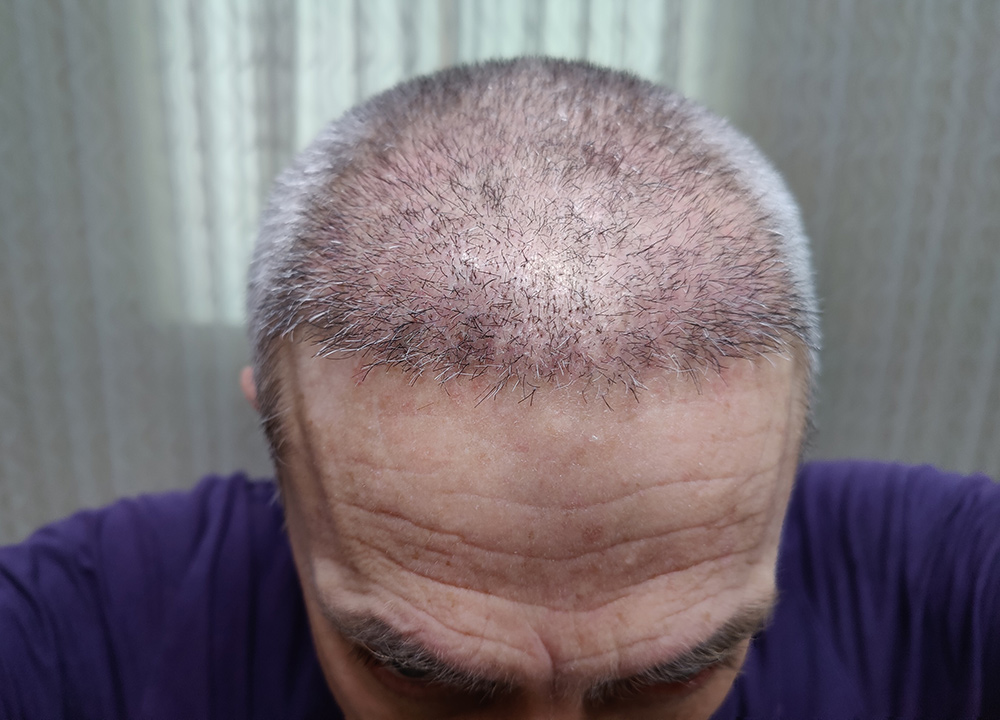
The first few days focus on protecting the newly transplanted follicles. Mild swelling, redness and a sensation of tightness in the scalp are common during this stage. Small scabs form around each graft as part of the normal healing response.
During this period, the grafts are at their most delicate. Rest, gentle care and avoiding pressure or friction on the scalp all support early healing and graft stability. This early phase of recovery follows a similar pattern after an FUE hair transplant, where protecting graft integrity plays a key role in long-term results.
Days 4 to 7 – Early Scalp Recovery
By the end of the first week, swelling typically reduces and discomfort continues to ease. The grafts begin to stabilise, which lowers the risk of accidental displacement. Many people can return to desk-based work at this stage, although strenuous activity and exercise are still avoided. This phase marks the transition from immediate aftercare to early recovery.
Weeks 2 to 4 – Early Recovery and Shedding Phase
Between weeks two and four, the scalp continues to settle, and scabs fall away naturally. This period often coincides with the temporary shedding of transplanted hair, sometimes referred to as shock loss.
Although it can feel discouraging, shedding is a normal part of the hair transplant healing process. The follicles remain healthy beneath the skin and are preparing for the next stage of growth. At this point, the scalp usually looks healed, even though visible hair density may temporarily decrease.
Months 1 to 3 – The Resting Phase
During months one to three, the hair transplant timeline enters a quieter stage. The follicles are alive but resting, which means visible progress is minimal. This phase can test patience, as changes are subtle or absent. However, important biological processes are taking place beneath the surface, including the establishment of the blood supply and preparation for new hair growth.

Months 3 to 6 – Early Hair Growth Begins
From around month three, early regrowth often starts to appear. New hairs tend to be fine, soft and lighter in texture at first, and growth may be uneven across different areas of the scalp.
By months four to six, progress becomes easier to see. Hair gradually increases in length and density, and the overall appearance begins to improve. This stage of the hair transplant growth timeline is often when people feel reassured that recovery is moving in the right direction.
Months 6 to 12 – Maturation and Visible Results
Between six and twelve months, transplanted hair continues to thicken and mature. Texture becomes more consistent with surrounding hair, and density improves as follicles complete additional growth cycles.
For most people, the majority of visible results are achieved by twelve months. In some cases, particularly when larger areas are treated, subtle improvements may continue beyond this point as the hair fully matures.
Factors That Can Influence Your Hair Transplant Timeline
While the overall hair transplant recovery pattern is consistent, individual experiences can vary slightly. Several factors can influence how quickly healing and regrowth occur.
- Individual healing response: Skin and hair growth cycles differ between people
- Size of the transplant area: Larger procedures may take longer to show full results
- Scalp care and hygiene: Gentle care supports healthy healing
- Adherence to aftercare advice: Following guidance helps protect grafts and support regrowth
Final Thoughts on the Hair Transplant Timeline
A hair transplant is best understood as a long-term process rather than an instant result. While early healing happens relatively quickly, visible improvements develop steadily over many months as the scalp recovers and transplanted hair progresses through its natural growth cycles.
At Atlantis Medical, the focus is on ensuring patients understand each stage of the hair transplant timeline so expectations remain realistic throughout recovery. With appropriate care, clear guidance, and patience, every phase of healing plays an important role in achieving natural, lasting results.
How to Book a Consultation
Booking your consultation is simple.
- Call us on (03) 9070 5234
- Contact us via our website
- Email us at enquiries@atlantismedical.com.au
- Or visit us at Level 2, 148 Glenferrie Road, Malvern, Vic 3144
Opening Hours
Mon – Fri: 8:30am – 5:00pm
Sat – Sun: Closed
Frequently Asked Questions
How long does a hair transplant take to heal completely?
The scalp typically heals within a few weeks, allowing most people to return to normal daily activities. However, full healing in terms of hair growth and maturation continues over several months as follicles progress through their natural growth cycles.
When does hair start growing after a hair transplant?
New hair growth usually begins around three months after the procedure, although it may initially appear fine and uneven. More noticeable growth typically develops between four and six months as density gradually increases.
Is shedding normal during the hair transplant timeline?
Temporary shedding of transplanted hair is a normal part of the recovery process and commonly occurs within the first month. This shedding does not mean the transplant has failed, as the follicles remain healthy beneath the skin.
When will final hair transplant results be visible?
Most people see the majority of their results between nine and twelve months after surgery. In some cases, subtle improvements in thickness and texture can continue beyond twelve months.
Does everyone follow the same hair transplant recovery timeline?
While the overall stages of recovery are consistent, individual timelines can vary slightly. Factors such as healing response, scalp care and the size of the treated area can influence how quickly results develop.
Any surgical or invasive procedure carries risks. Before proceeding, you should seek a second opinion from an appropriately qualified health practitioner.

About the Author
Dr. Vikram Jayaprakash
Dr. Vikram Jayaprakash is the Clinical Director of Atlantis Medical, one of Melbourne’s premier hair restoration clinics. Trained at the University of Southampton Medical School, he spent over a decade working alongside Dr. Russell Knudsen at the renowned Knudsen Clinic before establishing his own practice. As one of only three doctors in Australia to hold Board Certification from The American Board of Hair Restoration Surgery and one of two to attain Fellowship status with the International Society of Hair Restoration Surgery, Dr. Jayaprakash brings unparalleled expertise to every procedure.
Categories
Categories
- Female Hair Loss (7)
- General (3)
- Hair Health (13)
- Hair Loss (19)
- Hair Loss Treatment (11)
- Hair Transplant (20)
- Male Hair Loss (9)
- Non Surgical Treatments (1)
- Scalp Health (7)