Can You Regrow Hair Without Surgery?
Last updated on June 17, 2026
What Hair Regrowth Really Depends On
Whether you can regrow hair without surgery depends on one key factor: whether the follicles in the affected area are still capable of producing hair. If the follicles are still active but weakened, miniaturised or disrupted by a temporary trigger, non-surgical treatment may help support new visible growth or improve density over time.
If follicles are no longer functioning, the situation is different. Non-surgical options may still support the surrounding hair and scalp, but they cannot create new follicles in an area where viable follicles are no longer present. This is why understanding the cause, stage and pattern of hair loss matters before deciding what may be suitable.
What Does Regrowing Hair Actually Mean?
Regrowing hair means new visible hair growth in an area where hair has thinned or reduced. Without surgery, this is most realistic when follicles are still present and able to produce hair, even if the hairs have become finer, weaker or less visible over time.
This is different from improving the appearance of existing hair. Reduced shedding can help preserve the hair that remains, and stronger existing hairs may make the scalp look denser, but true regrowth depends on follicle activity. If the follicle is no longer active, non-surgical treatment is unlikely to bring hair back in that area.
Why Active Follicles Matter
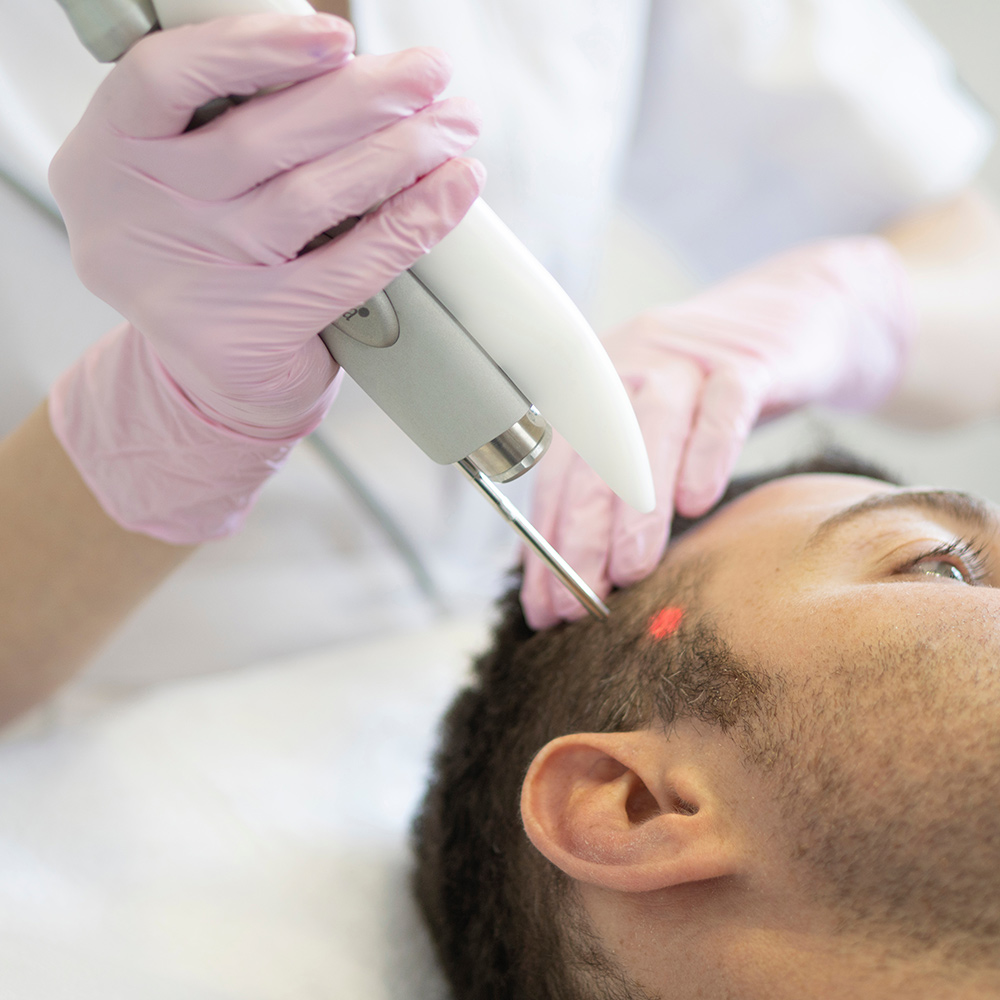
Hair follicles can become smaller and produce finer hairs before they stop producing visible hair altogether. This process is often described as miniaturisation, and it is one reason early hair loss may still respond differently from long-standing hair loss. When follicles are miniaturised but still active, the aim is usually to support healthier function and encourage stronger growth where possible.
Once follicles have stopped functioning, the options become more limited. This is where the difference between non-surgical treatment and hair transplant surgery becomes important. Non-surgical treatment works with existing follicles, while a hair transplant involves moving follicles from one area of the scalp to another. That does not mean surgery is always required, but it does mean the presence or absence of active follicles is central to the conversation.
When Hair May Regrow Without Surgery
Hair may have a better chance of improving without surgery when thinning is recent, early or linked to a factor that can be addressed. This may include early pattern hair loss, diffuse shedding, hormonal changes, scalp health issues, stress-related shedding or hair loss that follows illness or medication changes.
In these situations, the goal is usually to support the follicles that are still active. Depending on the cause, this may involve reducing ongoing shedding, supporting the hair growth cycle, improving scalp health or helping miniaturised hairs become stronger. Results can vary, and the same visible thinning can have different causes, so assessment is important before making assumptions.
When Non-Surgical Regrowth May Be Limited
Non-surgical hair regrowth may be limited when hair loss is advanced, long-standing or linked to follicles that are no longer active. If an area has been bare or very thin for many years, there may not be enough viable follicle activity left for non-surgical treatment to produce meaningful regrowth.
This does not mean there are no possible next steps, but expectations need to be realistic. Non-surgical options may still be useful for supporting surrounding hair or slowing further change in suitable cases, but they cannot replace follicles that are no longer present or functioning. This is why the stage and duration of hair loss are just as important as the visible pattern.
Non-Surgical Options That May Support Hair Growth
Non-surgical hair loss treatment is not a single approach. At Atlantis Medical, the options discussed during consultation may depend on the cause of thinning, the stage of hair loss, scalp health and whether the follicles appear active. These may include:
- Hair loss medication: Medication may be discussed where the aim is to support the hair growth cycle, reduce ongoing shedding or manage certain types of pattern hair loss. This may involve oral or topical options depending on suitability.
- Low Level Laser Therapy (LLLT): LLLT uses light-based energy and may be considered to support scalp health and follicle activity in suitable cases, particularly where thinning is early to moderate.
- Growth Factor Therapy: Growth Factor Therapy may be used to support the scalp environment and encourage healthier follicle function where appropriate.
- CRP Treatment: CRP is another non-surgical option that may be discussed for suitable individuals experiencing hair thinning or reduced density.
Why Assessment Matters Before Choosing a Non-Surgical Option
The same visible thinning can have different causes. A widening part line, increased shedding, crown thinning or reduced density through the top of the scalp may look similar at first, but each can have a different underlying pattern. Non-surgical treatment is more likely to be relevant when there are active follicles to support.
At Atlantis Medical, we assess the pattern of hair loss, scalp condition, density, medical history and likely cause before discussing whether non-surgical treatment may be suitable. We also consider whether the hair loss appears recent or long-standing, whether it is still progressing and whether the affected follicles are likely to respond to support.
What Non-Surgical Hair Regrowth Can Realistically Achieve
Non-surgical hair regrowth is most realistic when follicles are still active, and the hair loss is early or moderate. In suitable cases, treatment may help support visible growth, strengthen miniaturised hairs or improve density where follicles are still capable of producing hair.
However, non-surgical treatment has clear limits. It cannot create new follicles in areas where follicles are no longer functioning. If you are noticing shedding, thinning or reduced density, contact Atlantis Medical to arrange a consultation. We can assess your hair loss and discuss whether non-surgical treatment may be suitable for your situation.
How to Book a Consultation
Booking your consultation is simple.
- Call us on (03) 9070 5234
- Contact us via our website
- Email us at enquiries@atlantismedical.com.au
- Or visit us at Level 2, 148 Glenferrie Road, Malvern, Vic 3144
Opening Hours
Mon – Fri: 8:30am – 5:00pm
Sat – Sun: Closed
FAQs
Can thinning hair grow back without surgery?
Thinning hair may grow back without surgery if the follicles are still active and the cause of hair loss can be addressed. This is more likely with early or active thinning than in areas where hair has been absent for a long time.
Can hair grow back if the follicle is still alive?
Hair may grow back if the follicle is still alive and capable of producing hair. Non-surgical treatment may help support follicle function in suitable cases, but the response depends on the cause and stage of hair loss.
How do I know if my hair follicles are still active?
It can be difficult to know without assessment. Fine hairs, recent thinning or reduced density may suggest there is still follicle activity, while long-standing bare areas may be less likely to respond to non-surgical treatment.
Can non-surgical treatment work for male and female hair loss?
Non-surgical treatment may be considered for both male and female hair loss, depending on the cause, pattern and stage of thinning. Men and women may notice different signs, so assessment helps guide what may be suitable.
When is hair transplant surgery considered instead?
Hair transplant surgery may be discussed when hair loss is more established or when non-surgical options are unlikely to achieve the desired level of improvement. Suitability depends on donor area strength, hair loss pattern and long-term planning.
Any surgical or invasive procedure carries risks. Before proceeding, you should seek a second opinion from an appropriately qualified health practitioner.