FUE Versus FUT Hair Transplant, Key Differences Explained Meta Description: Learn the real differences between FUE and FUT hair transplant methods, including healing, scarring and how doctors decide which option may suit you best.
Last updated on May 14, 2026
New Blog – FUE Versus FUT
Understanding the key differences between two established hair transplant methods
When researching surgical hair restoration, many people come across FUE and FUT and want to understand how the two techniques differ. Both are established hair transplant methods used worldwide, and each follows a different approach to donor hair collection and healing. Understanding these differences helps explain why treatment planning can vary from person to person.
In this blog, we compare a FUE versus FUT hair transplant and explain the key differences in how each method works, what recovery and scarring may look like and why doctors may recommend one approach over another depending on individual factors. A clear comparison helps create realistic expectations and supports more informed decision-making.
FUE Versus FUT Hair Transplant: What Is the Main Difference?
The main difference between FUE and FUT lies in how hair grafts are harvested from the donor area. Both methods relocate healthy follicles to thinning areas, but they approach donor management in different ways.
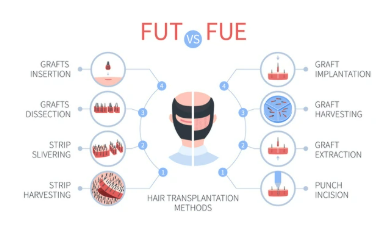
FUE hair transplant involves extracting individual follicular units directly from the scalp using specialised tools, while FUT removes a narrow strip of tissue from which grafts are carefully prepared.
Both techniques can produce natural-looking results, but they differ in how the donor area heals and how graft collection is planned over time. Understanding this distinction is key when comparing FUE vs FUT hair transplant options.
Side-by-Side Comparison, FUE vs FUT
Although both techniques aim for similar outcomes, several practical differences influence how doctors approach FUE vs FUT hair transplant planning.
- Graft harvesting: FUE removes individual follicles, FUT removes a strip containing multiple grafts.
- Scarring: FUE usually leaves small dot-like scars, while FUT creates a linear scar.
- Recovery: FUE recovery involves multiple small healing sites, whereas FUT focuses on a single donor incision.
- Session planning: FUT may allow larger graft numbers at once, while FUE offers flexibility for staged sessions.
- Hair styling considerations: FUE may suit shorter hairstyles, while FUT scars are often hidden with longer hair.
FUE vs FUT Recovery: What People Usually Notice
Recovery experiences differ mainly in the donor area rather than the transplanted hair itself. With FUE, healing occurs across many small extraction points, which often means less tightness but more widespread healing spots initially. FUT recovery typically centres around the linear donor incision, which may feel tighter during early healing.
Both methods require careful aftercare, and recovery timelines vary between individuals. The key point is that neither approach is automatically easier; they simply heal differently depending on how the donor hair was collected.
FUE vs FUT Scarring: What Is Realistic to Expect
Scarring is one of the most common concerns when comparing FUE vs FUT hair transplant techniques. FUE generally leaves small circular scars that are spread across the donor area, while FUT leaves a single linear scar where the strip was removed.
Visibility depends on factors such as healing characteristics, hair length and surgical technique. In practice, both types of scarring can be well concealed when planned appropriately, which is why scarring alone rarely determines the best method.
Who May Be Better Suited to FUE?
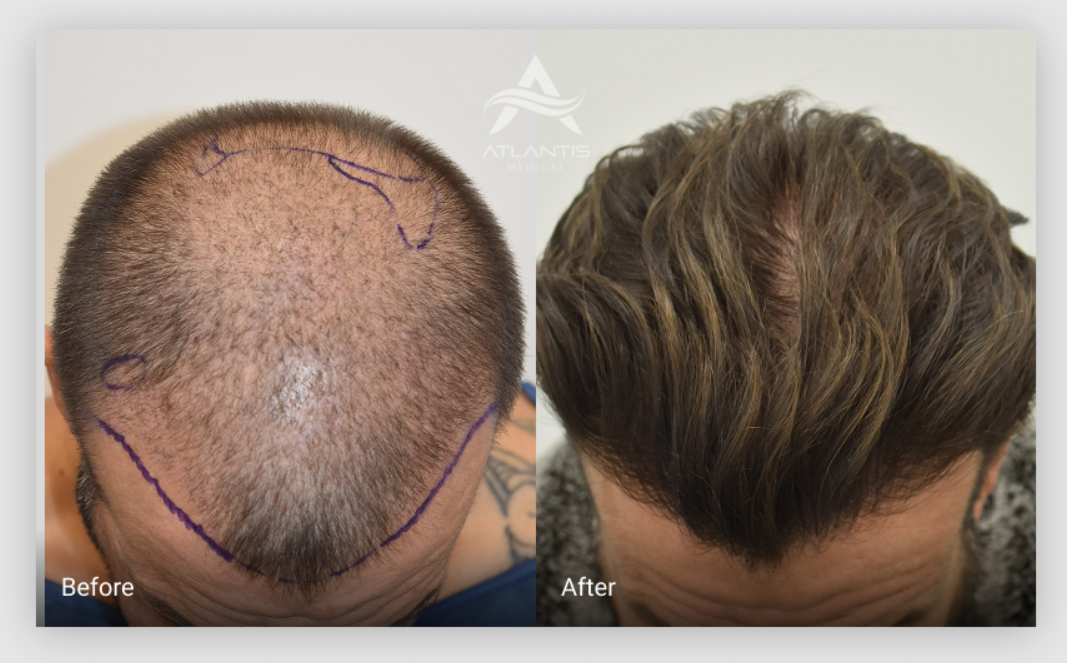
FUE hair transplant techniques are often chosen when flexibility and minimal visible scarring are priorities. The ability to extract individual grafts allows selective donor management, which can be useful in certain treatment plans.
- Individuals who prefer shorter hairstyles
- People considering smaller or staged procedures
- Those wanting to avoid a linear scar
- Cases where donor area flexibility is important
Who May Be Better Suited to FUT?
FUT hair transplant techniques remain an important option, particularly when efficiency and graft numbers are priorities. For some individuals, FUT allows strong donor utilisation within a single procedure.
- Those needing higher graft numbers in one session
- Individuals with strong donor density
- People comfortable with longer hairstyles that conceal a linear scar
- Cases requiring efficient donor management
Common Myths About FUE vs FUT
There are many misconceptions surrounding FUE vs FUT hair transplant options, which can make decision-making more confusing than necessary.
Myth 1: FUE is always better than FUT
Both methods are established techniques and can achieve strong results when chosen appropriately. The most suitable option depends on factors such as donor hair characteristics, treatment goals and long-term planning rather than popularity alone.
Myth 2: FUT is outdated
FUT remains widely used and is often preferred in specific clinical situations. For some individuals, it allows efficient graft collection and can still be an important part of modern hair restoration planning.
Myth 3: One method guarantees better results
Outcomes depend on planning, donor quality and execution rather than the harvesting method alone. Natural-looking results come from careful surgical design and realistic expectations rather than choosing one technique over another.
Final Thoughts
The real truth behind FUE versus FUT hair transplant options is that both techniques can produce natural, long-lasting results when matched to the right individual. The decision is rarely about choosing the newest or most popular method, but about selecting the approach that best supports long-term hair restoration planning.
Understanding the difference between a FUE vs FUT transplant helps reduce confusion and creates more realistic expectations. If you are considering a hair transplant, a professional assessment can help determine which method aligns best with your individual goals and donor characteristics.
How to Book a Consultation
Booking your consultation is simple.
- Call us on (03) 9070 5234
- Contact us via our website
- Email us at enquiries@atlantismedical.com.au
- Or visit us at Level 2, 148 Glenferrie Road, Malvern, Vic 3144
Opening Hours
Mon – Fri: 8:30am – 5:00pm
Sat – Sun: Closed
FAQs
What is the difference between FUE and FUT hair transplant techniques?
The main difference is how donor hair is collected. FUE removes individual follicular units, while FUT removes a small strip of scalp from which grafts are prepared.
Is FUE better than FUT?
Neither method is universally better. The most suitable option depends on factors such as donor hair availability, hairstyle preferences and long-term treatment planning.
Does FUT leave a scar?
Yes, FUT typically leaves a linear scar in the donor area. In many cases, this can be concealed with longer hair, depending on healing and hairstyle choice.
Is FUE recovery faster than FUT?
Recovery experiences differ, rather than one being universally faster. FUE involves multiple small healing points, while FUT healing focuses on a single donor incision.
Which hair transplant is best for me, FUE or FUT?
The best option depends on individual factors such as hair loss pattern, donor density and treatment goals. A professional consultation helps determine which approach is most suitable.
Any surgical or invasive procedure carries risks. Before proceeding, you should seek a second opinion from an appropriately qualified health practitioner.